Your browser is outdated. This site works best on modern browsers such as Google Chrome or Microsoft Edge.


The Alliance for Higher Education in Prison is now accepting presentation proposal submissions and financial aid applications for the 16th National Conference on Higher Education in Prison, which will take place March 30–April 1, 2027, in Long Beach, CA.
The Alliance for Higher Education in Prison is now accepting presentation proposal submissions and financial aid applications for the 16th National Conference on Higher Education in Prison, which will take place March 30–April 1, 2027, in Long Beach, CA.

Internships are an important part of the college experience for many students, but a rare opportunity for students in college-in-prison programs. However, advances in remote work technology are expanding possibilities for incarcerated students to build out their resumes. Paid internships help students save money to support themselves and set them up to secure well-paying jobs after release, making it more likely that they will be able to break the cycle of incarceration. Read Erica Orta’s story in this article outlining Vera's experience hosting a paid internship for incarcerated learners.
Internships are an important part of the college experience for many students, but a rare opportunity for students in college-in-prison programs. However, advances in remote work technology are expanding possibilities for incarcerated students to build out their resumes. Paid internships help students save money to support themselves and set them up to secure well-paying jobs after release, making it more likely that they will be able to break the cycle of incarceration. Read Erica Orta’s story in this article outlining Vera's experience hosting a paid internship for incarcerated learners.

Listen to the hosts of Creative Conversations: Healing from Within Through the Arts podcast recorded in Grafton Correctional Institution as they speak with three NCHEP attendees, who visited the prison in Grafton, OH on a Site Visit on April 8th, 2026. Together, they talk about the 15th National Conference on Higher Education in Prison in Cleveland, discuss the importance of access to the arts in prisons, and share some quotes and color associations.
Listen to the hosts of Creative Conversations: Healing from Within Through the Arts podcast recorded in Grafton Correctional Institution as they speak with three NCHEP attendees, who visited the prison in Grafton, OH on a Site Visit on April 8th, 2026. Together, they talk about the 15th National Conference on Higher Education in Prison in Cleveland, discuss the importance of access to the arts in prisons, and share some quotes and color associations.

A recent study of formerly incarcerated individuals reveals education as a form of self-care that drives resilience and a unique pathway out of the criminal justice system. Participants emphasize the need for robust reentry support, including housing and mentorship, to facilitate educational success. Key policy implications include expanding educational access, strengthening reentry programs, integrating education with employment, enhancing data collection, and maximizing federal funding. Investing in education for justice-impacted individuals is crucial for reducing recidivism and creating a more equitable society. Author note: Maine has joined Reentry 2030 (reentry2030.org), which could directly address some of the recommendations addressed in the article.
A recent study of formerly incarcerated individuals reveals education as a form of self-care that drives resilience and a unique pathway out of the criminal justice system. Participants emphasize the need for robust reentry support, including housing and mentorship, to facilitate educational success. Key policy implications include expanding educational access, strengthening reentry programs, integrating education with employment, enhancing data collection, and maximizing federal funding. Investing in education for justice-impacted individuals is crucial for reducing recidivism and creating a more equitable society. Author note: Maine has joined Reentry 2030 (reentry2030.org), which could directly address some of the recommendations addressed in the article.

Applications are now open for the 2026-2027 cohort of the Corrections Education-to-Employment Leadership Academy (CELA), hosted by Jobs for the Future (JFF), the Correctional Education Association (CEA), and the Alliance for Higher Education in Prison (the Alliance). Embedded within JFF’s Fair Chance to Advance (FC2A) initiative, CELA is a competitive, yearlong professional development experience designed to equip emerging leaders in prison-based education to strengthen and expand high-quality programs, build powerful cross-sector partnerships, and drive systems-level change in correctional education. Leaders from correctional agencies, colleges, and universities that administer or oversee postsecondary programs in prison are encouraged to apply. This is a great opportunity to grow your leadership and amplify your impact. Applications close May 7th.
Applications are now open for the 2026-2027 cohort of the Corrections Education-to-Employment Leadership Academy (CELA), hosted by Jobs for the Future (JFF), the Correctional Education Association (CEA), and the Alliance for Higher Education in Prison (the Alliance). Embedded within JFF’s Fair Chance to Advance (FC2A) initiative, CELA is a competitive, yearlong professional development experience designed to equip emerging leaders in prison-based education to strengthen and expand high-quality programs, build powerful cross-sector partnerships, and drive systems-level change in correctional education. Leaders from correctional agencies, colleges, and universities that administer or oversee postsecondary programs in prison are encouraged to apply. This is a great opportunity to grow your leadership and amplify your impact. Applications close May 7th.
The Fellowship for Leaders in Higher Education in Prison (FLHEP) is a leadership development fellowship for formerly incarcerated leaders in the Higher Ed in Prison field supported by Ascendium. The Fellowship, designed by Rockwood staff, trainers, and system-impacted consultants, is designed to strengthen and cohere a core group of formerly incarcerated leaders working in the HEP sector. The Fellowship will consist of three in-person weeklong sessions in August, November, and March, individual professional coaching and peer coaching between September and April, participant support funds, and virtual Community Calls and webinars in between in-person sessions to grow the synergy and connection between the cohort and offer leaders additional chances to build concrete management skills. Applications close May 14th.
The Fellowship for Leaders in Higher Education in Prison (FLHEP) is a leadership development fellowship for formerly incarcerated leaders in the Higher Ed in Prison field supported by Ascendium. The Fellowship, designed by Rockwood staff, trainers, and system-impacted consultants, is designed to strengthen and cohere a core group of formerly incarcerated leaders working in the HEP sector. The Fellowship will consist of three in-person weeklong sessions in August, November, and March, individual professional coaching and peer coaching between September and April, participant support funds, and virtual Community Calls and webinars in between in-person sessions to grow the synergy and connection between the cohort and offer leaders additional chances to build concrete management skills. Applications close May 14th.

From college-in-prison programs to job training, women are building futures that punishment alone was never designed to create. This story is part of “Breaking the Cycle,” a three-part Ms. series on how women impacted by incarceration are building new futures—from education and job training, to debate teams and book clubs inside jails.
From college-in-prison programs to job training, women are building futures that punishment alone was never designed to create. This story is part of “Breaking the Cycle,” a three-part Ms. series on how women impacted by incarceration are building new futures—from education and job training, to debate teams and book clubs inside jails.

Michigan can show the country what it looks like to treat higher education in prison as a public good, one that strengthens families, communities, and the workforce. We know that not as a slogan, but as people who have had to build our lives on the other side of incarceration. We are both justice impacted, and we’ve both seen what happens when someone is finally offered a real opportunity to learn.
Michigan can show the country what it looks like to treat higher education in prison as a public good, one that strengthens families, communities, and the workforce. We know that not as a slogan, but as people who have had to build our lives on the other side of incarceration. We are both justice impacted, and we’ve both seen what happens when someone is finally offered a real opportunity to learn.

The 15th annual National Conference on Higher Education in Prison, which brought together advocates and educators, wrapped up Friday, April 10th. The theme of this year's three-day event is "Beyond Access," with attendees exploring learning and sharing how to improve the depth of education people are accessing behind bars.
The 15th annual National Conference on Higher Education in Prison, which brought together advocates and educators, wrapped up Friday, April 10th. The theme of this year's three-day event is "Beyond Access," with attendees exploring learning and sharing how to improve the depth of education people are accessing behind bars.

A list of eligible PEPs approved to operate is provided here. The list includes the OPE ID, the educational institution’s name, the city and state in which the institution is located, the approved program name, the program type (credential level), the location of the program (penal institution name), the city and state in which the penal institution is located, and the program’s approval date. The list is updated on a quarterly basis. Please note approved programs may not yet be operating. We recommend contacting the educational institution directly for more information.
A list of eligible PEPs approved to operate is provided here. The list includes the OPE ID, the educational institution’s name, the city and state in which the institution is located, the approved program name, the program type (credential level), the location of the program (penal institution name), the city and state in which the penal institution is located, and the program’s approval date. The list is updated on a quarterly basis. Please note approved programs may not yet be operating. We recommend contacting the educational institution directly for more information.
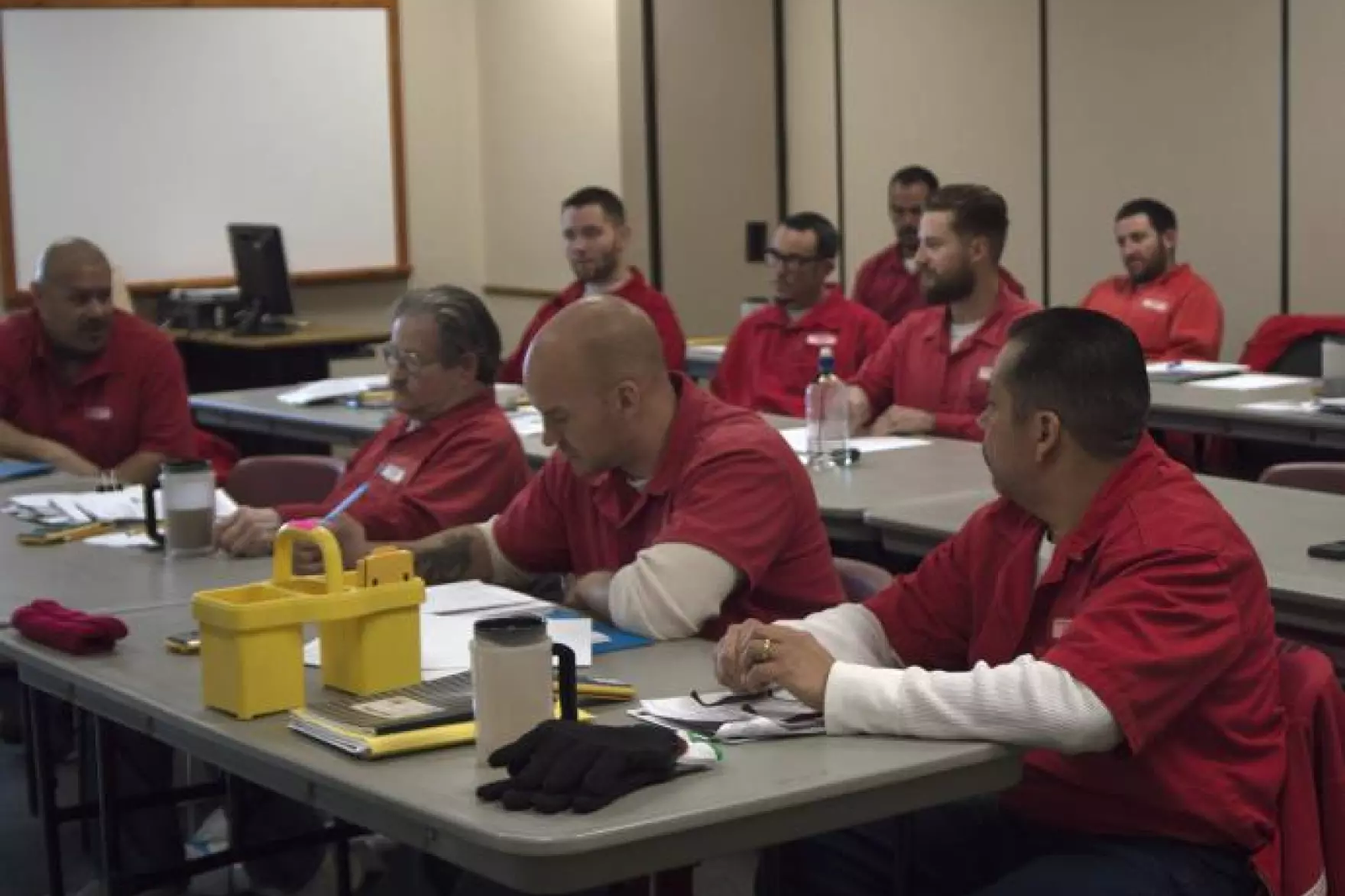
The University of Wyoming’s (UW) prison education program could soon expand to the state’s highest security prison, and eventually to all five state correctional facilities.
The University of Wyoming’s (UW) prison education program could soon expand to the state’s highest security prison, and eventually to all five state correctional facilities.

This report documents Phase 1 of a multi-phase effort to understand Mississippi’s current higher education in prison data landscape and identify opportunities for improvement. Drawing on stakeholder interviews, document review, and engagement with the Mississippi Consortium for Higher Education in Prison (MCHEP) and other state partners, the assessment examines what data are currently collected, how those data are used, where there are gaps and inconsistencies, and what limits the usefulness of existing data for decision-making.
This report documents Phase 1 of a multi-phase effort to understand Mississippi’s current higher education in prison data landscape and identify opportunities for improvement. Drawing on stakeholder interviews, document review, and engagement with the Mississippi Consortium for Higher Education in Prison (MCHEP) and other state partners, the assessment examines what data are currently collected, how those data are used, where there are gaps and inconsistencies, and what limits the usefulness of existing data for decision-making.
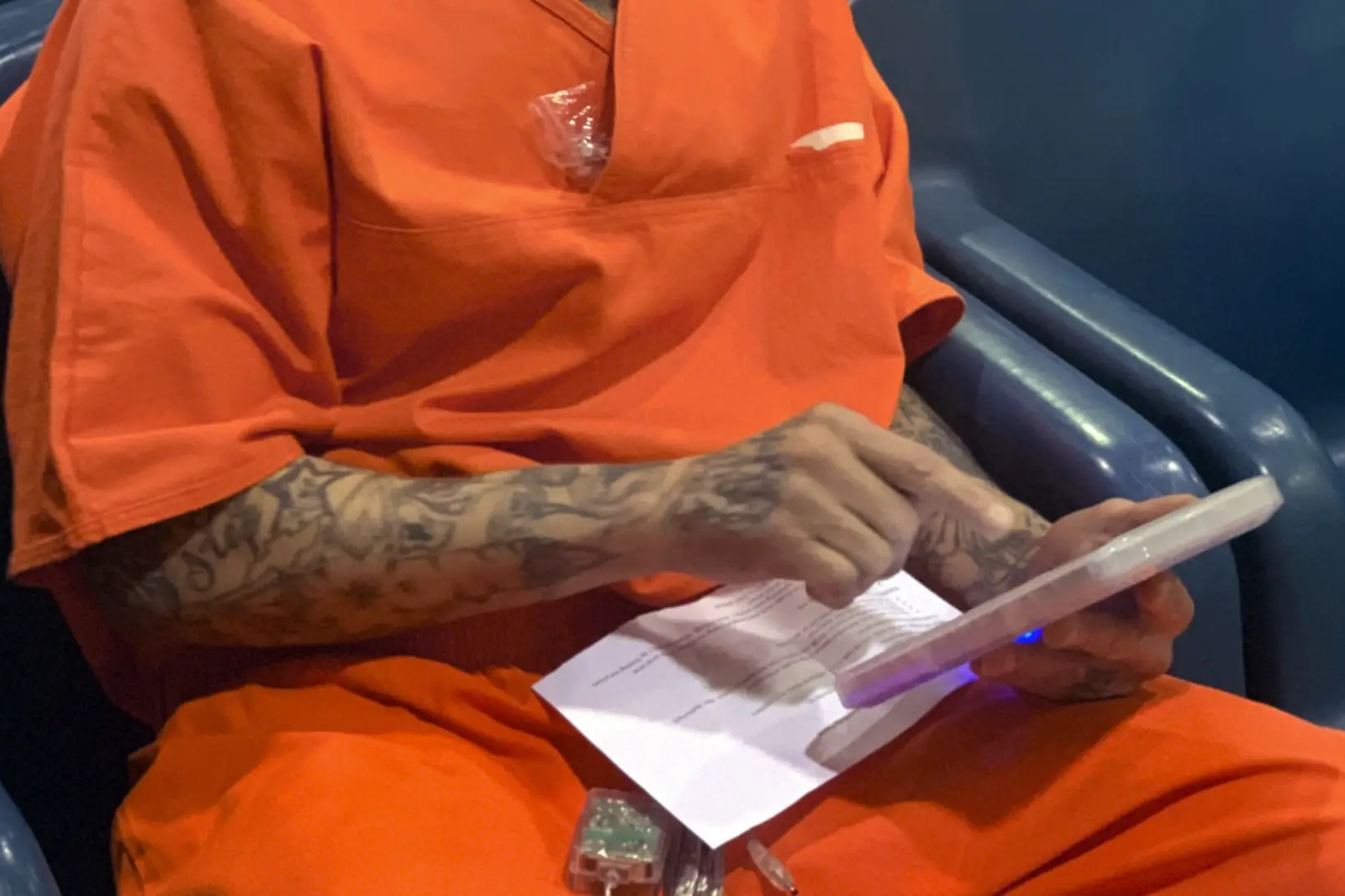
More than eight in 10 men and women incarcerated in Massachusetts prisons are using computer tablets for basic education and vocational learning, the state’s Department of Correction announced in April.
More than eight in 10 men and women incarcerated in Massachusetts prisons are using computer tablets for basic education and vocational learning, the state’s Department of Correction announced in April.
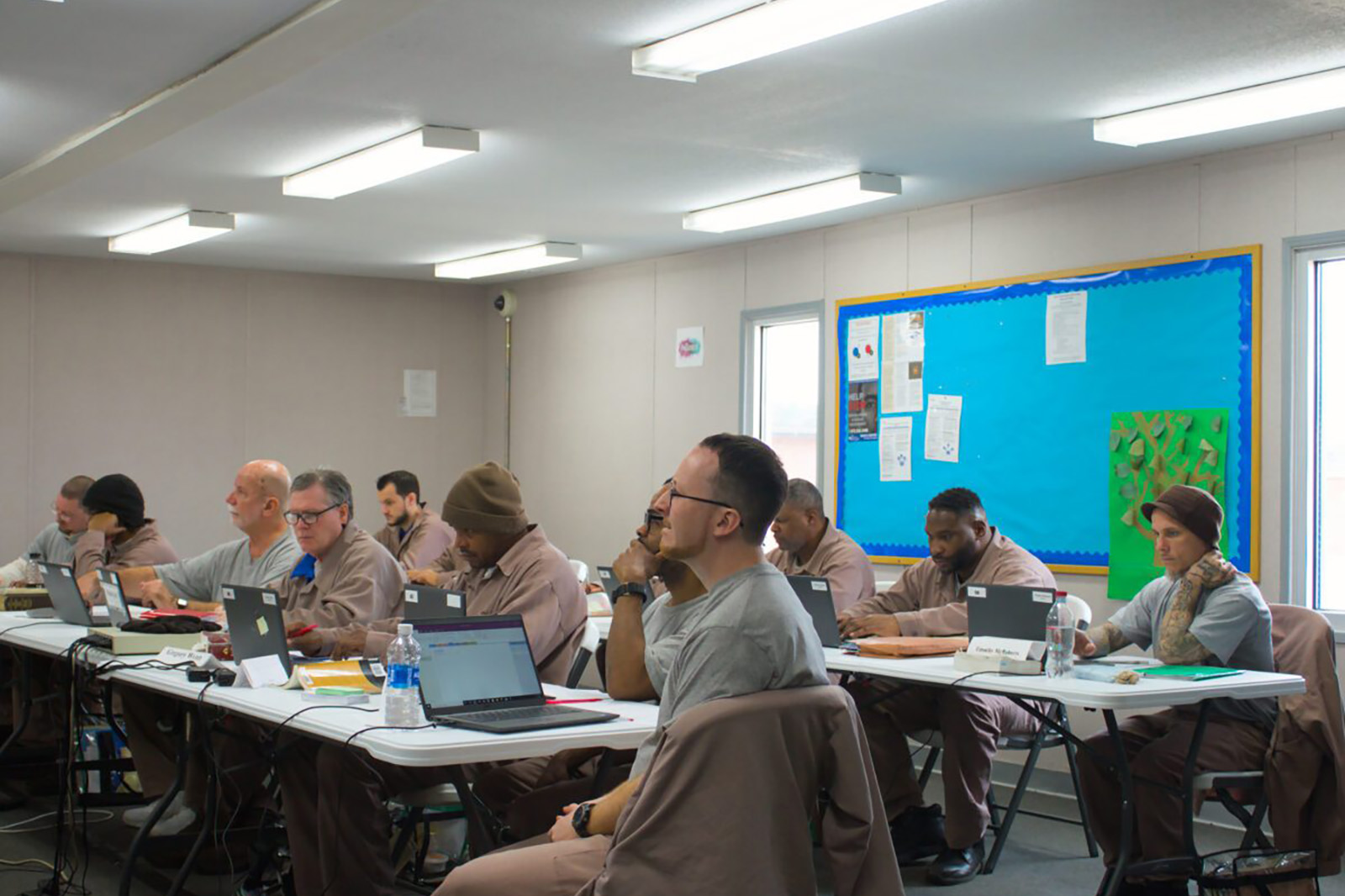
EdNC visited state prisons in North Carolina and spoke with students who are incarcerated, people who were formerly incarcerated, prison educators, and prison staff to understand the educational paths a person who is incarcerated might take, what is working and what isn’t in the current system, and the importance of successful reentry.
EdNC visited state prisons in North Carolina and spoke with students who are incarcerated, people who were formerly incarcerated, prison educators, and prison staff to understand the educational paths a person who is incarcerated might take, what is working and what isn’t in the current system, and the importance of successful reentry.
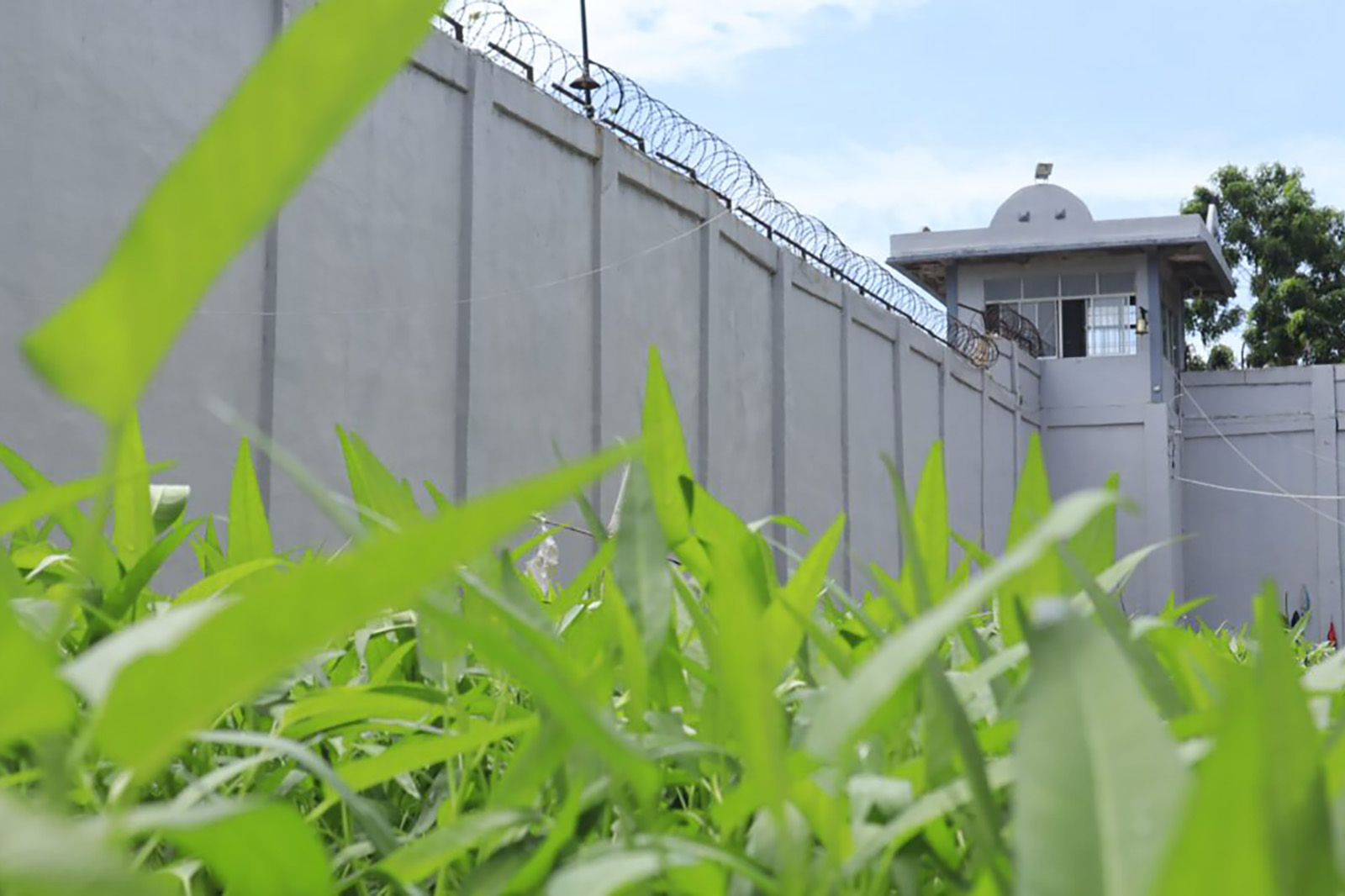
In the public imagination, “prison food” often evokes trays of bland and heavily processed meals that lack nutritional quality. Unfortunately, this stereotype reflects reality in many prisons today. Reports from advocacy groups describe ongoing problems with unsafe, ultra-processed food in correctional facilities, contributing to poor health outcomes and emotional distress. At the same time, the United States continues to have persistently high incarceration and recidivism rates. In response, a growing number of prison farm initiatives, garden programs, and justice-oriented food partnerships are using agriculture to support rehabilitation, build skills, and increase access to fresh and local foods inside and outside correctional settings.
In the public imagination, “prison food” often evokes trays of bland and heavily processed meals that lack nutritional quality. Unfortunately, this stereotype reflects reality in many prisons today. Reports from advocacy groups describe ongoing problems with unsafe, ultra-processed food in correctional facilities, contributing to poor health outcomes and emotional distress. At the same time, the United States continues to have persistently high incarceration and recidivism rates. In response, a growing number of prison farm initiatives, garden programs, and justice-oriented food partnerships are using agriculture to support rehabilitation, build skills, and increase access to fresh and local foods inside and outside correctional settings.
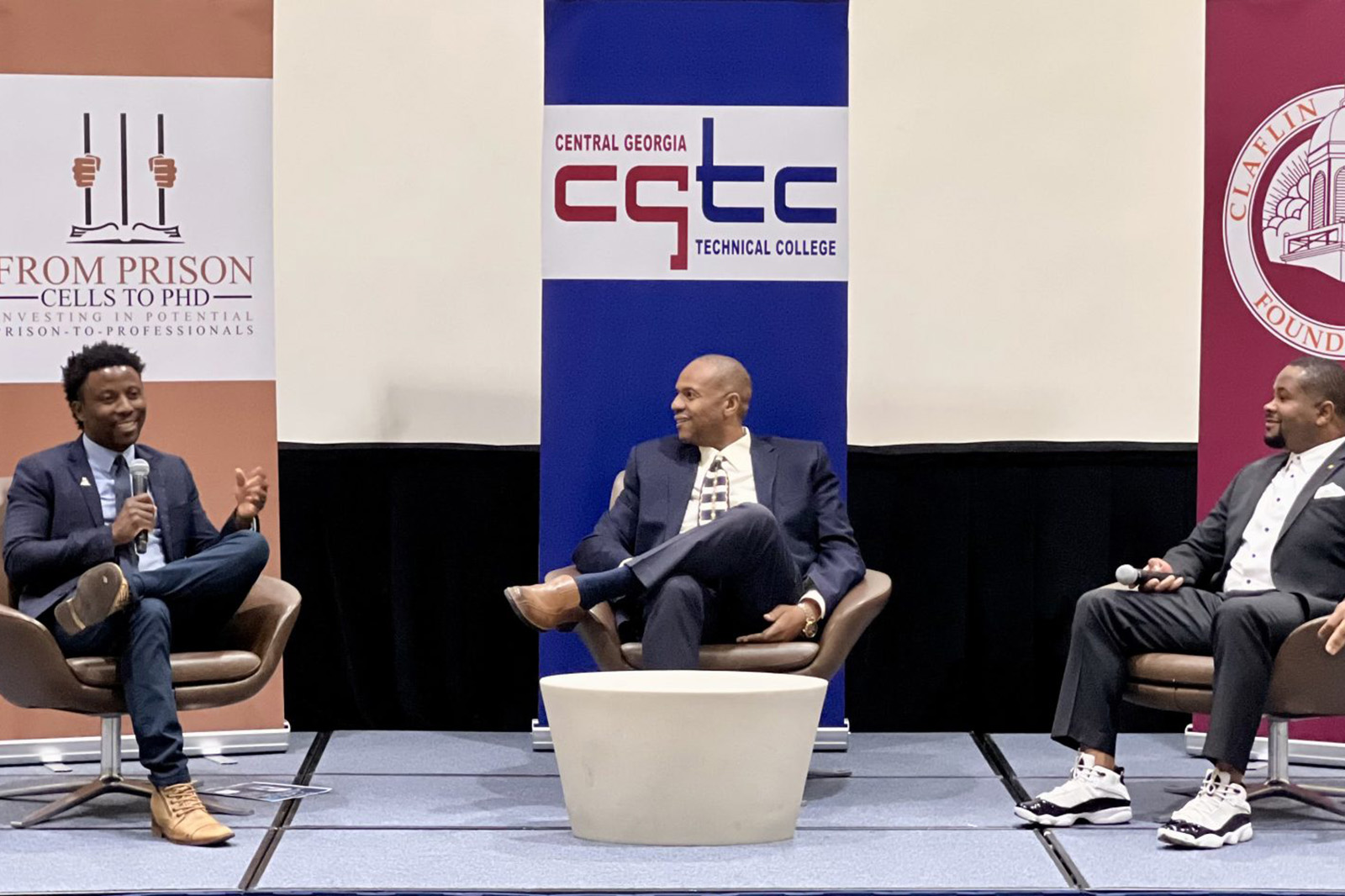
Historically Black colleges and universities have long served communities most impacted by mass incarceration — though they’ve been slow to enter the prison education space. The HBCU Higher Education in Prison initiative is trying to change that. Led by Claflin University President Dwaun J. Warmack, the effort started in South Carolina. Five HBCUs are already operating prison education programs in the state: Claflin University, Benedict College, Denmark Technical College, Voorhees University, and Morris College. It’s the only such unified HBCU presence in the country, according to Warmack.
Historically Black colleges and universities have long served communities most impacted by mass incarceration — though they’ve been slow to enter the prison education space. The HBCU Higher Education in Prison initiative is trying to change that. Led by Claflin University President Dwaun J. Warmack, the effort started in South Carolina. Five HBCUs are already operating prison education programs in the state: Claflin University, Benedict College, Denmark Technical College, Voorhees University, and Morris College. It’s the only such unified HBCU presence in the country, according to Warmack.
The reinstatement of Pell eligibility through the FAFSA Simplification Act in 2020 was a historic victory. However, funding alone cannot bring us out of the desert. Without colleges willing and prepared to teach behind the walls, the desert remains. As part of Claflin University’s focus on community development, the HBCU Higher Education in Prison Initiative was born to help address this challenge. Led by a coalition of HBCU presidents, formerly incarcerated scholars, and higher education in prison practitioners, our mission is clear: to address the higher-education-in-prison desert by equipping HBCUs to create and expand high-quality programs for incarcerated students.
The reinstatement of Pell eligibility through the FAFSA Simplification Act in 2020 was a historic victory. However, funding alone cannot bring us out of the desert. Without colleges willing and prepared to teach behind the walls, the desert remains. As part of Claflin University’s focus on community development, the HBCU Higher Education in Prison Initiative was born to help address this challenge. Led by a coalition of HBCU presidents, formerly incarcerated scholars, and higher education in prison practitioners, our mission is clear: to address the higher-education-in-prison desert by equipping HBCUs to create and expand high-quality programs for incarcerated students.

This resource from the New England Board of Higher Education (NEBHE) and their New England Prison Education Collaborative (NEPEC) team explores the challenges formerly incarcerated learners face and highlights strategies to better align basic needs, workforce, and education supports.
This resource from the New England Board of Higher Education (NEBHE) and their New England Prison Education Collaborative (NEPEC) team explores the challenges formerly incarcerated learners face and highlights strategies to better align basic needs, workforce, and education supports.
The Berkeley Journal of Criminal Law (“BJCL”) is currently accepting submissions for the Fall 2026 issue. BJCL is especially interested in publishing voices of incarcerated individuals or those who work closely with them. Submissions will be accepted on a rolling basis until August 1, 2026.
The Berkeley Journal of Criminal Law (“BJCL”) is currently accepting submissions for the Fall 2026 issue. BJCL is especially interested in publishing voices of incarcerated individuals or those who work closely with them. Submissions will be accepted on a rolling basis until August 1, 2026.
As community colleges increasingly implement for-credit educational programs within prison settings, they are likely to serve many disabled students. However, little is known about the services provided to students with disabilities in prison education programs facilitated by community colleges and how accommodations are managed. Thus, the purpose of this exploratory, explanatory sequential mixed-method study was to gain insights into disability accommodations provided in for-credit prison education programs. The findings highlight the lack of adequate services provided to disabled students in prison education programs and the complexity of providing disability accommodations within the carceral context. The findings also point to several implications for practice including a need for more collaboration among stakeholders and the importance of reimagining processes and procedures to work within the highly controlled environment of a prison education program.
As community colleges increasingly implement for-credit educational programs within prison settings, they are likely to serve many disabled students. However, little is known about the services provided to students with disabilities in prison education programs facilitated by community colleges and how accommodations are managed. Thus, the purpose of this exploratory, explanatory sequential mixed-method study was to gain insights into disability accommodations provided in for-credit prison education programs. The findings highlight the lack of adequate services provided to disabled students in prison education programs and the complexity of providing disability accommodations within the carceral context. The findings also point to several implications for practice including a need for more collaboration among stakeholders and the importance of reimagining processes and procedures to work within the highly controlled environment of a prison education program.

At every level of government and in communities across New York, one question keeps coming up: How do we improve public safety? Too often, one of the most effective solutions is overlooked – education. Expanding access to education is proven to reduce recidivism and increase employment opportunities for people returning to their communities from incarceration.
At every level of government and in communities across New York, one question keeps coming up: How do we improve public safety? Too often, one of the most effective solutions is overlooked – education. Expanding access to education is proven to reduce recidivism and increase employment opportunities for people returning to their communities from incarceration.
The Education Justice Project (EJP) at the University of Illinois invites applications for its Mexico Scholarship Program, with awards designed to support the educational goals of people impacted by incarceration and deportation. Applicants can compete for three 10,000-peso scholarships in each of three categories: individuals formerly incarcerated in a U.S. or Mexican prison, people deported from the U.S. to Mexico, and immediate family members of someone deported from the U.S. The deadline for submitting the application and a 500-word essay outlining academic or career goals is March 31, 2026.
The Education Justice Project (EJP) at the University of Illinois invites applications for its Mexico Scholarship Program, with awards designed to support the educational goals of people impacted by incarceration and deportation. Applicants can compete for three 10,000-peso scholarships in each of three categories: individuals formerly incarcerated in a U.S. or Mexican prison, people deported from the U.S. to Mexico, and immediate family members of someone deported from the U.S. The deadline for submitting the application and a 500-word essay outlining academic or career goals is March 31, 2026.
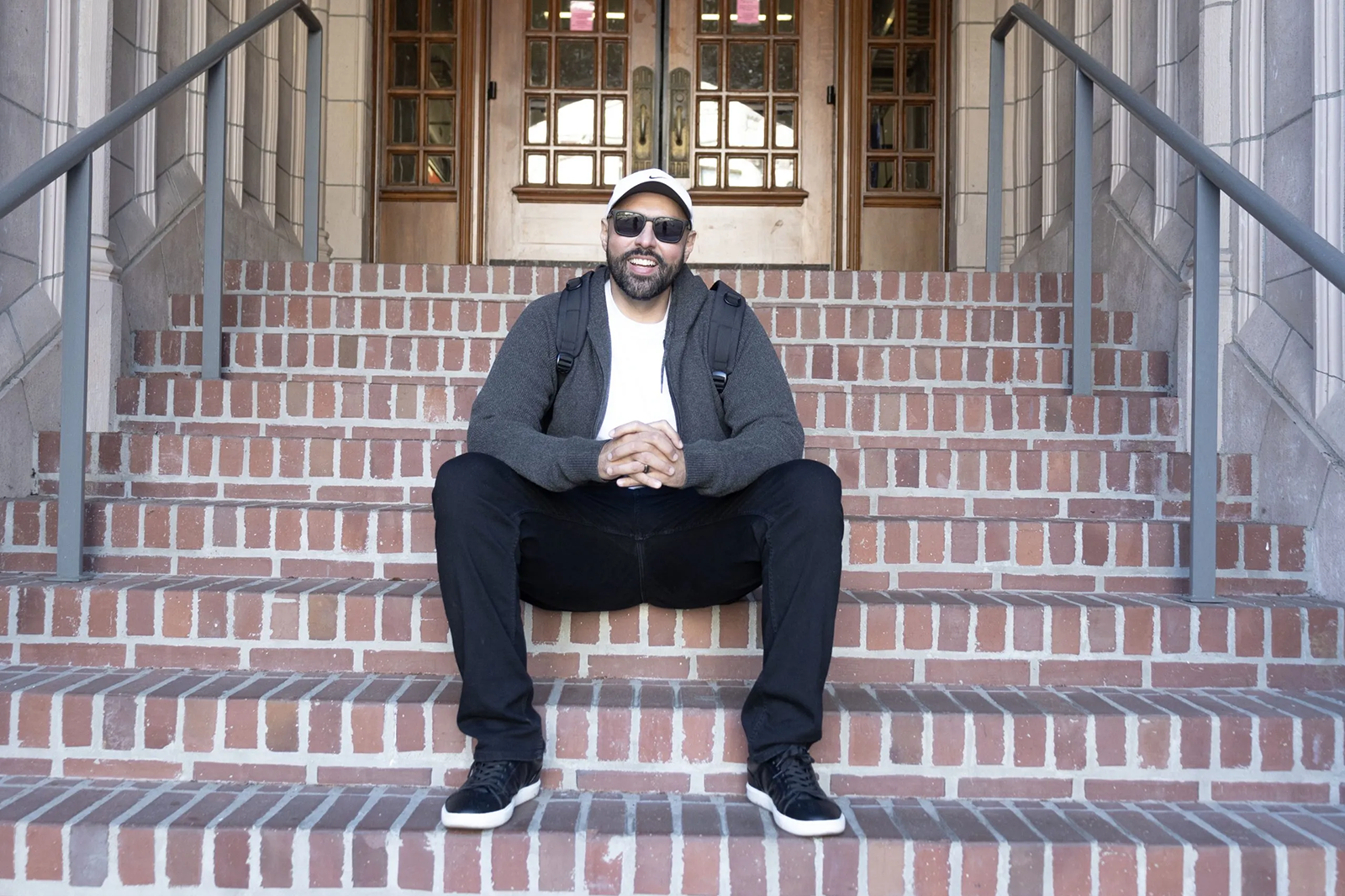
Benjamin Brockie, Aaniiih of the Fork Belknap Reservation, served over 22 years of a 67 year sentence for two robberies. As a college student right out of prison, in October 2024, he learned first hand the gaps in support for people like himself reentering society and has continuously worked towards creating change in the prison system as an advocate for those still incarcerated.
Benjamin Brockie, Aaniiih of the Fork Belknap Reservation, served over 22 years of a 67 year sentence for two robberies. As a college student right out of prison, in October 2024, he learned first hand the gaps in support for people like himself reentering society and has continuously worked towards creating change in the prison system as an advocate for those still incarcerated.

Psychologists are teaching in-prison college programs and finding renewed purpose in their work.
Psychologists are teaching in-prison college programs and finding renewed purpose in their work.

The higher education landscape in the United States mirrors broader societal inequalities experienced by formerly incarcerated people seeking access to colleges and universities. This conceptual paper employs Ray’s theory of racialized organizations to explore how structural barriers faced by formerly incarcerated students, with a particular focus on Black men, who are disproportionately represented in both the criminal justice and higher education systems. We conclude with implications for institutional accountability and offer recommendations to support this population as we argue that without substantial shifts in policies and practices, higher education institutions will continue to perpetuate barriers rather than offer a second chance for formerly incarcerated Black men.
The higher education landscape in the United States mirrors broader societal inequalities experienced by formerly incarcerated people seeking access to colleges and universities. This conceptual paper employs Ray’s theory of racialized organizations to explore how structural barriers faced by formerly incarcerated students, with a particular focus on Black men, who are disproportionately represented in both the criminal justice and higher education systems. We conclude with implications for institutional accountability and offer recommendations to support this population as we argue that without substantial shifts in policies and practices, higher education institutions will continue to perpetuate barriers rather than offer a second chance for formerly incarcerated Black men.

The collection will bring together a mix of research-informed, practice-based, reflective, collaborative, and narrative contributions. Alongside theoretical and research-informed chapters, we actively encourage more informal pieces, such as personal reflections on using library services while incarcerated or on delivering library and reading initiatives. International contributions are welcomed to enable sharing of practice across correctional systems and cultural contexts. Rather than assuming a single model of library practice or training, the book starts from the premise that provision of libraries and reading initiatives vary widely across prison systems and cultures, and that these differences offer important opportunities for mutual learning. This book is being proposed for publication as part of Routledge’s Critical Issues in Library and Information Sciences and Services series.
The collection will bring together a mix of research-informed, practice-based, reflective, collaborative, and narrative contributions. Alongside theoretical and research-informed chapters, we actively encourage more informal pieces, such as personal reflections on using library services while incarcerated or on delivering library and reading initiatives. International contributions are welcomed to enable sharing of practice across correctional systems and cultural contexts. Rather than assuming a single model of library practice or training, the book starts from the premise that provision of libraries and reading initiatives vary widely across prison systems and cultures, and that these differences offer important opportunities for mutual learning. This book is being proposed for publication as part of Routledge’s Critical Issues in Library and Information Sciences and Services series.
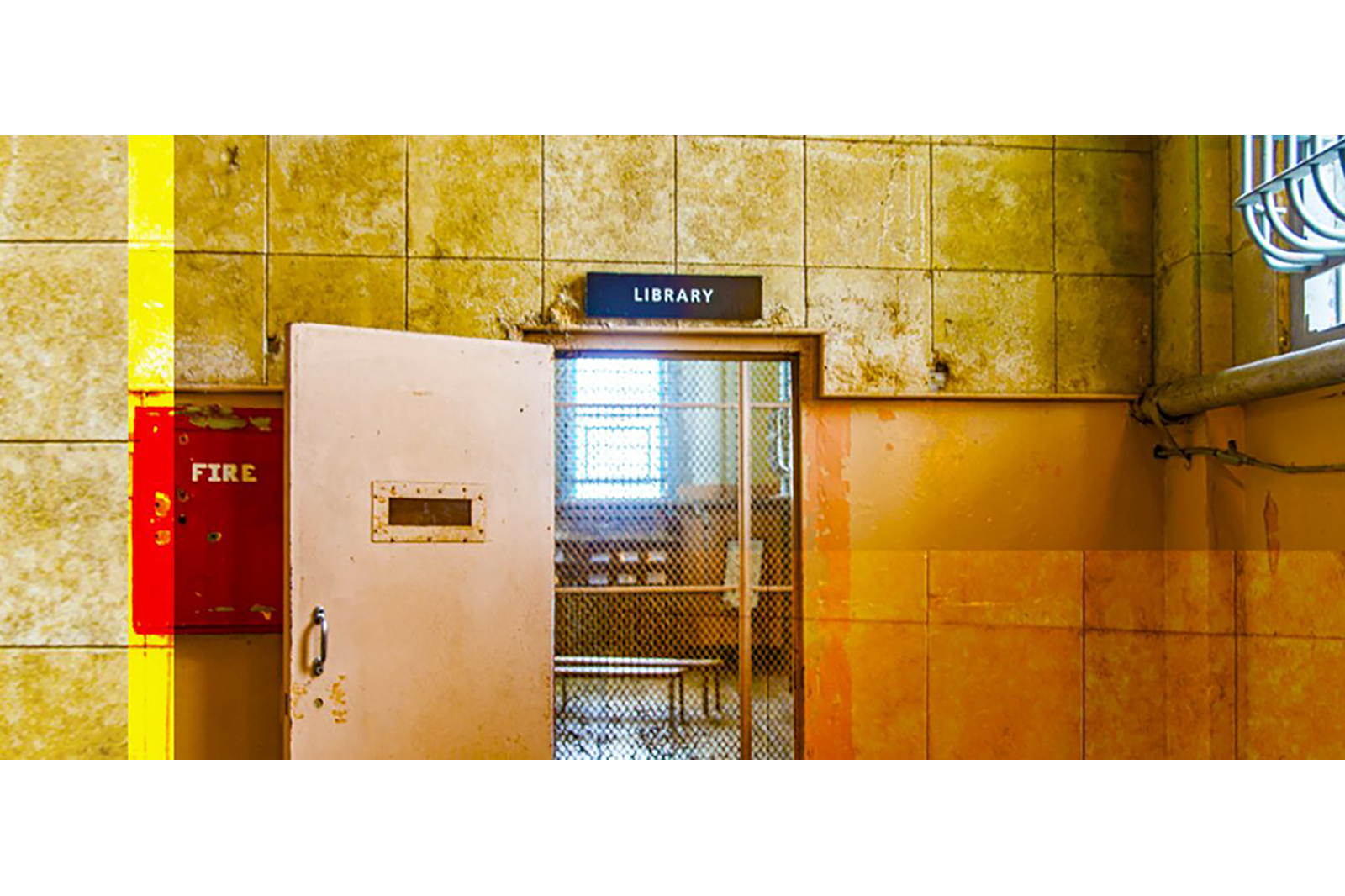
Why bother? What’s the point? These are questions that inevitably arise in conversations about college programs in prisons. But these questions make certain assumptions about education in general and higher education in prisons specifically. What is it, exactly, that is not worth it, according to skeptics and naysayers, about college education in prison? Ought we not to consider just what the point of education is in the first place? My position as a prisoner has given me the opportunity to contemplate the question and arrive at some insight into it.
Why bother? What’s the point? These are questions that inevitably arise in conversations about college programs in prisons. But these questions make certain assumptions about education in general and higher education in prisons specifically. What is it, exactly, that is not worth it, according to skeptics and naysayers, about college education in prison? Ought we not to consider just what the point of education is in the first place? My position as a prisoner has given me the opportunity to contemplate the question and arrive at some insight into it.

The first time I enrolled in college was in 2004 when a local private college offered classes at Greene Correctional Facility. I was 17 years old and I was only able to to complete two college classes before the college lost funding to run the program. Like many other incarcerated college students in New York, the loss of Pell and TAP grants for people in prison interrupted my educational journey. And unfortunately, it would take more than six credits for me to transform my life.
The first time I enrolled in college was in 2004 when a local private college offered classes at Greene Correctional Facility. I was 17 years old and I was only able to to complete two college classes before the college lost funding to run the program. Like many other incarcerated college students in New York, the loss of Pell and TAP grants for people in prison interrupted my educational journey. And unfortunately, it would take more than six credits for me to transform my life.

The American Library Association praised the Prison Libraries Act, introduced in January by Rep. Emanuel Cleaver II (D-MO-5), along with co-leads Rep. Shontel Brown (D-OH-11), and Rep. Valerie Foushee (D-NC-4). The bill would establish a grant program within the Department of Justice to provide library services to incarcerated individuals to advance reintegration efforts, reduce recidivism and increase educational opportunities.
The American Library Association praised the Prison Libraries Act, introduced in January by Rep. Emanuel Cleaver II (D-MO-5), along with co-leads Rep. Shontel Brown (D-OH-11), and Rep. Valerie Foushee (D-NC-4). The bill would establish a grant program within the Department of Justice to provide library services to incarcerated individuals to advance reintegration efforts, reduce recidivism and increase educational opportunities.

The recording is available from JFF's December 16, 2025, virtual learning session with Ashley Shuler and Sean Addie from the U.S. Department of Education, Sheila Meiman from NASFAA, Stephanie Gaskill from Loyola University, and Katie Dwyer from Chemeketa Community College, institutional leaders who recently navigated the PEP application process.
The recording is available from JFF's December 16, 2025, virtual learning session with Ashley Shuler and Sean Addie from the U.S. Department of Education, Sheila Meiman from NASFAA, Stephanie Gaskill from Loyola University, and Katie Dwyer from Chemeketa Community College, institutional leaders who recently navigated the PEP application process.
On January 12th, Inside Higher Ed published the article, “Prison Education May Raise Risk of Reincarceration” (subsequently changed to “Prison Education May Raise Risk of Reincarceration for Technical Violations”). The same day, we published a public statement expressing our concerns with the misleading and sensationalizing title of the article as well as some of the framework and conclusions of the cited study. On January 23rd, they published our longer Letter to the Editor.
On January 12th, Inside Higher Ed published the article, “Prison Education May Raise Risk of Reincarceration” (subsequently changed to “Prison Education May Raise Risk of Reincarceration for Technical Violations”). The same day, we published a public statement expressing our concerns with the misleading and sensationalizing title of the article as well as some of the framework and conclusions of the cited study. On January 23rd, they published our longer Letter to the Editor.

In today’s technology-driven world, digital literacy isn’t just a skill—it’s a lifeline. For individuals who are incarcerated, the ability to effectively use digital tools can mean the difference between returning to the community prepared or being left even further behind. In applied research, RTI International and Ithaka S+R have demonstrated that providing quality access to technology in prisons and jails is a key step in preparing individuals who are incarcerated for life after release. This blog post highlights the urgency of developing digital skills as well as some promising practices and strategies for doing so.
In today’s technology-driven world, digital literacy isn’t just a skill—it’s a lifeline. For individuals who are incarcerated, the ability to effectively use digital tools can mean the difference between returning to the community prepared or being left even further behind. In applied research, RTI International and Ithaka S+R have demonstrated that providing quality access to technology in prisons and jails is a key step in preparing individuals who are incarcerated for life after release. This blog post highlights the urgency of developing digital skills as well as some promising practices and strategies for doing so.
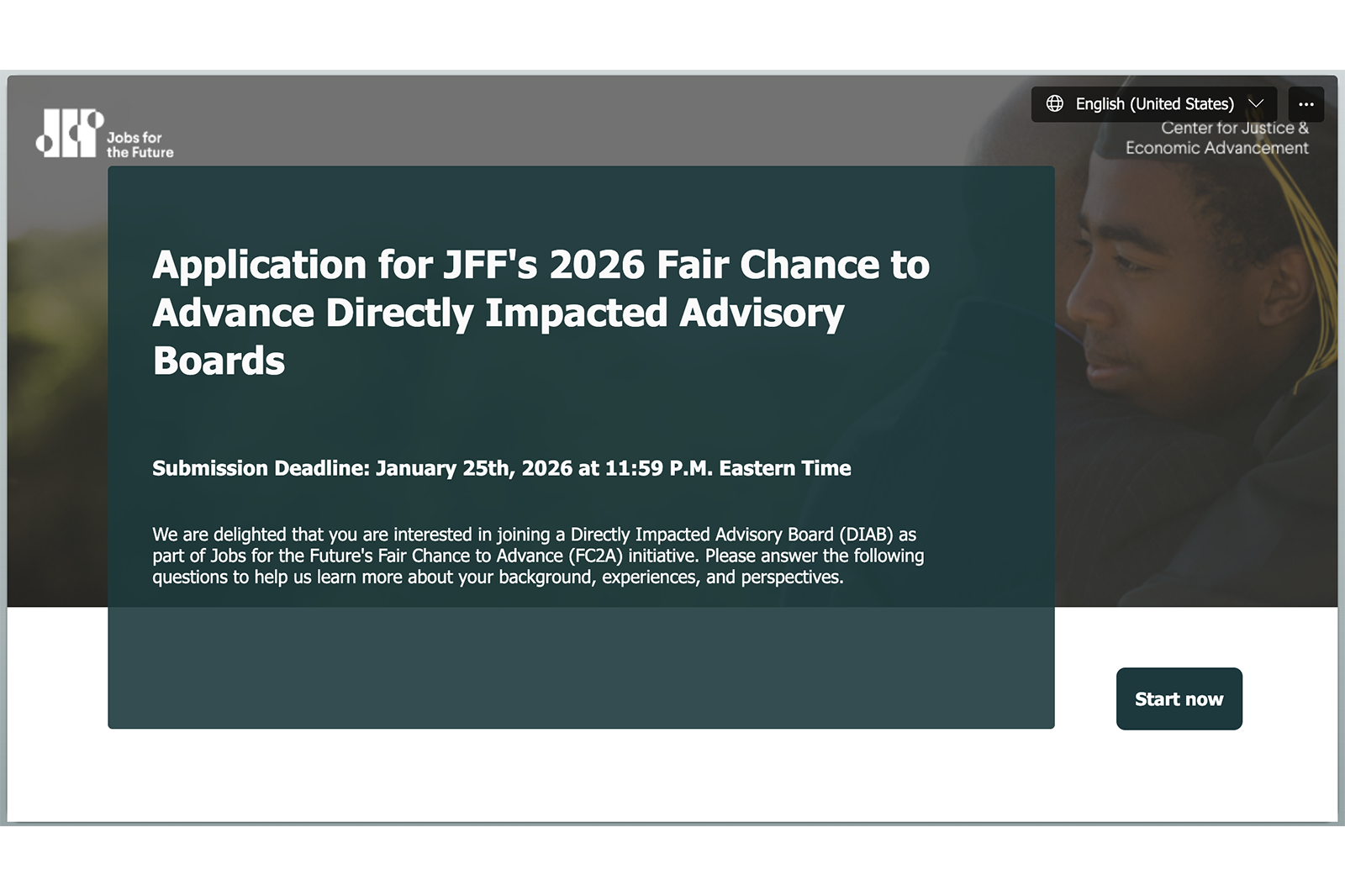
Jobs for the Future (JFF)’s Fair Chance to Advance (FC2A) initiative strengthens statewide education-to-employment pathways for people impacted by incarceration. A core strategy of FC2A is JFF’s support for State Action Networks in four states—Kansas, Maine, North Carolina, and Oregon. The Directly Impacted Advisory Board (DIAB) is a required component of each FC2A State Action Network. DIAB members bring lived experience and professional expertise to serve as trusted advisors to state agency leaders and network partners. Through this role, members help shape network strategies, policy priorities, and coordinated action plans, ensuring systems change efforts are informed by—and accountable to—the real-world experiences of people directly impacted by incarceration.
Jobs for the Future (JFF)’s Fair Chance to Advance (FC2A) initiative strengthens statewide education-to-employment pathways for people impacted by incarceration. A core strategy of FC2A is JFF’s support for State Action Networks in four states—Kansas, Maine, North Carolina, and Oregon. The Directly Impacted Advisory Board (DIAB) is a required component of each FC2A State Action Network. DIAB members bring lived experience and professional expertise to serve as trusted advisors to state agency leaders and network partners. Through this role, members help shape network strategies, policy priorities, and coordinated action plans, ensuring systems change efforts are informed by—and accountable to—the real-world experiences of people directly impacted by incarceration.
